Pulmonary Embolism

Pulmonary Embolism

Share This Post

What is a Pulmonary Embolism

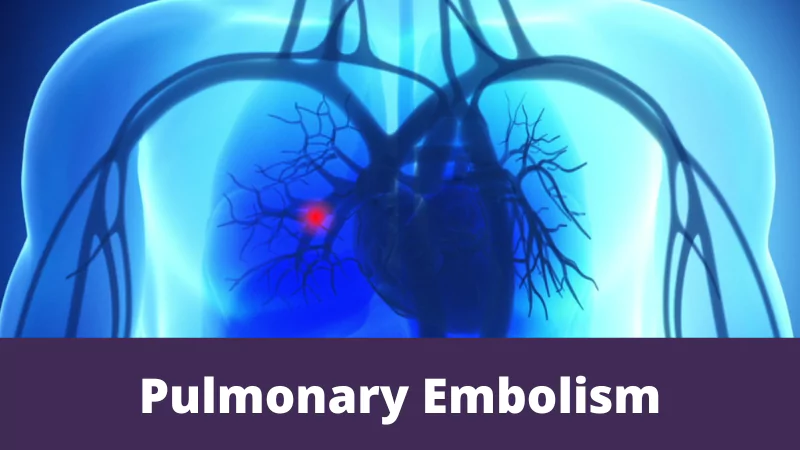
Pulmonary embolism describes an obstruction  of the pulmonary artery, or one of it’s branches, by a clot, usually derived from a thrombosis somewhere in the leg veins.

Large embolisms result in acute heart failure or sudden death. Smaller ones can cause death of sections of lung tissue, pleurisy of coughing up blood.

Research

A disordered MTHFR gene can lead to high homocysteine, which in turn negatively effect the health of blood vessels and can lead to an increased chance of developing a blood clot.  Therefore, Bansal (2014) examined MTHFR mutation and its impact on the risk of developing Deep Vein Thrombosis (DVT) or a Pulmonary Embolism (PE). Of the small group of patients with DVT, PE or high homocysteine that the author studied, 74% of them were found to be positive for a MTHFR mutation. 5 had the C677T mutation, 4 compound heterozygous (both the C677T & the A1298C), and 11 the A1298C.

Article Here


Related Posts

Autism and Low Glutathione Levels
Genes

Autism and Low Glutathione Levels

The role of glutathione Even though involvement of genetic abnormalities in autism spectrum disorders (ASD) is well-accepted, recent studies point to an equal contribution by ...
Read More →
Conditions

Why Some People Feel Worse During and After a Detox Program

Welcome to our health and wellness blog! Today, we’re tackling a topic that puzzles many health enthusiasts – why do some individuals feel worse during ...
Read More →
Spina bifida
Conditions

Spina bifida

What is Spina bifida? Spina bifida is termed a ‘Neural Tube Defect’ (NTD), and is a developmental defect in which the newborn baby has part ...
Read More →
MTHFR

Interleukin 6 – The Silent Contributor to Chronic Disease

Interleukin 6 (IL-6) is a critical cytokine involved in the regulation of immune responses, playing both protective and harmful roles within the body. While essential ...
Read More →
Addictive Behaviour
Conditions

Addictive Behaviour

What Are Addictions? An addictive behaviour is any activity, substance, object, or behaviour that becomes the major focus of a person’s life resulting in a ...
Read More →
Histamine and Methylation
Genes

Histamine and Methylation

Histamine Histamine is a hydrophilic vasoactive amine derived from histidine through carboxylation by L-histidine decarboxylase1. Histamine, once formed, can be stored or rapidly undergo deamination ...
Read More →
Scroll to Top
Carolyn Ledowsky

Stay Connected!

Sign up for our monthly newsletter with current MTHFR research, health tips, recipes, special offers and news about upcoming events including Carolyn’s live Q&A.

Subscribe