Methylation is a fundamental biochemical process that underpins everything from gene regulation and detoxification to neurotransmitter production and liver health. Most health practitioners are familiar with folate’s role in methylation—particularly in relation to homocysteine metabolism and MTHFR polymorphisms—but what’s less appreciated is the equally essential role of choline.
Emerging research, including a 2025 review by Bortz and Obeid, shines a spotlight on choline as a central, yet often overlooked, nutrient in one-carbon metabolism. Understanding choline’s role—and how it works alongside folate—is critical for practitioners supporting patients with neurological, cardiovascular, reproductive, or metabolic issues.
What Is Methylation and Why Does It Matter?
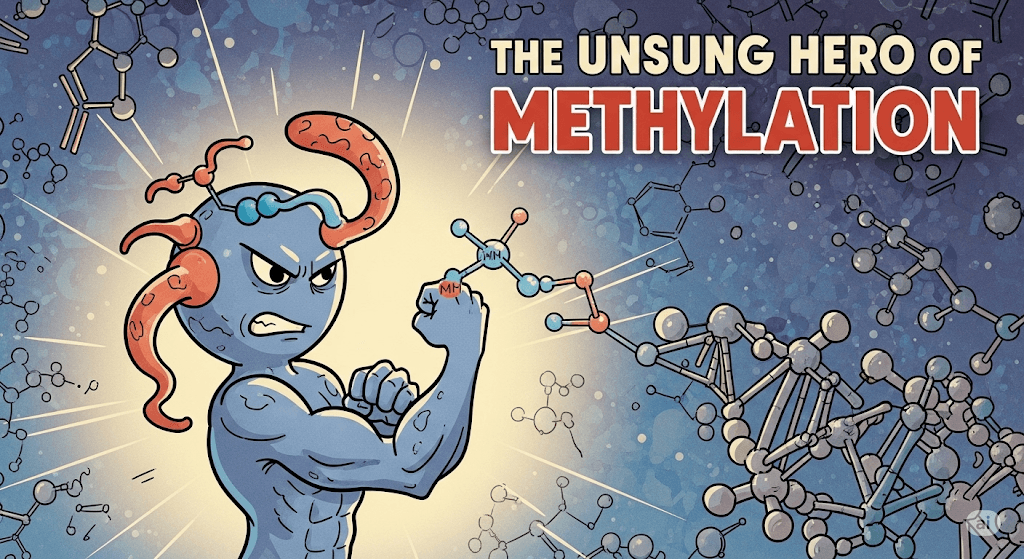
Methylation is the process of transferring a methyl group (–CH₃) from one molecule to another. It is essential for:
- DNA synthesis and repair
- Epigenetic gene regulation
- Neurotransmitter production (e.g., serotonin, dopamine)
- Detoxification via Phase II pathways
- Hormone metabolism
- Lipid transport and liver function
The universal methyl donor in these reactions is S-adenosylmethionine (SAMe). SAMe is produced from methionine, and its regeneration depends on the conversion of homocysteine back into methionine through either the folate-dependent pathway (via methionine synthase) or the betaine-dependent pathway (via the enzyme BHMT—betaine-homocysteine methyltransferase).
Folate and Choline: Interconnected in Methylation
Folate and choline feed into methylation through different—but complementary—routes:
- Folate, particularly in its 5-methyltetrahydrofolate (5-MTHF) form, donates methyl groups to homocysteine via methionine synthase (MS), in the presence of vitamin B12.
- Choline is oxidised to betaine, which donates methyl groups to homocysteine via BHMT, forming methionine and ultimately SAMe.
The review highlights that approximately 50% of cellular SAMe is produced via the BHMT pathway, which is powered by dietary choline or supplemental betaine. This underscores choline’s significance—especially in individuals with genetic impairments in folate metabolism (such as MTHFR C677T).
What Happens When Choline Is Deficient?
Animal studies cited in the paper show that a choline-deficient diet can:
- Reduce liver folate levels by 31–40%
- Halve hepatic SAMe concentrations
- Double plasma homocysteine levels
- Increase risk of fatty liver (hepatic steatosis)
- Impair phospholipid synthesis (e.g., phosphatidylcholine for cell membranes)
In other words, choline deficiency compromises both methylation and liver function. This effect is amplified during pregnancy, where insufficient choline intake can cause fatty liver not only in the mother but also in the developing fetus.
Folate Deficiency Impacts Choline, Too
The relationship is bidirectional. Folate deficiency has been shown to reduce hepatic choline content, exacerbate liver fat accumulation, and impair methylation. This interdependence means that supporting one nutrient while ignoring the other may lead to suboptimal outcomes.
For example, even when folate status is adequate, SAMe levels may still fall if choline or betaine is lacking—especially under stress, high methylation demand, or in those with BHMT or PEMT gene polymorphisms.
Homocysteine: Fasting vs. Functional Testing
Traditionally, elevated fasting homocysteine is used as a clinical marker of impaired methylation. However, the study shows that:
- Fasting homocysteine levels are primarily influenced by folate status.
- Post-methionine load homocysteine (PML-Hcy) is a more sensitive marker of BHMT (choline/betaine) activity.
In fact, betaine and choline supplementation significantly reduce PML-homocysteine, even when fasting levels are within range. Conversely, folate supplementation has only a minor effect on PML-Hcy. This suggests that measuring PML-Hcy can reveal hidden methylation imbalances and uncover a need for choline support.
Clinical Takeaways for Practitioners
- Don’t overlook choline when treating methylation dysfunction.
Supporting folate alone is insufficient if choline intake is low or the BHMT pathway is under strain. - Recognise life stages of increased demand.
Pregnancy, lactation, rapid growth, stress, and recovery from illness all increase methylation needs. These are critical times to assess both folate and choline status. - Use post-methionine load testing (where possible) to uncover hidden imbalances in one-carbon metabolism that aren’t visible in fasting homocysteine results.
- Be mindful of genetic variants in MTHFR, PEMT, and BHMT that influence nutrient needs and methylation capacity.
- Educate patients on dietary choline sources, especially if they follow plant-based or low-fat diets. Key sources include:
- Egg yolks
- Beef liver
- Fish (e.g., salmon)
- Chicken
- Quinoa
- Soybeans
- Brussels sprouts and broccoli
Conclusion
Choline deserves far more clinical attention than it currently receives. It is not just a liver nutrient or a precursor to acetylcholine—it is a vital co-player with folate in the methylation cycle, impacting SAMe production, homocysteine clearance, and overall metabolic resilience.
As the understanding of one-carbon metabolism continues to evolve, it’s time to recognise choline as a cornerstone of methylation support in functional and integrative care.
Reference:
Bortz, J., & Obeid, R. (2025). The Shuttling of Methyl Groups Between Folate and Choline Pathways. Preprints.
Want access to more premium articles like this?